 In 1981, I went to Camp Milbrook, the Larry Bird sleepaway basketball camp in Massachusetts for a month. I loved basketball. I loved Larry Bird. I hated the camp. The kids were mean, we mostly did gymnastics, and we only got to meet Larry once.
One day, more than halfway into my stay, I was walking alone, back to my barrack, when I saw what looked like the front of my dad’s car. I’d recognize the nose of that Peugeot anywhere. Was it a mirage? No. It was him! He had stopped on his way home to Cape Cod from court in Boston, taking the chance at possibly seeing me. I ran to his car, my legs pumping fast, my arms spread wide. I leapt the last few feet and landed into his waiting arms.
“Are you here to take me home?” I asked, tears filling my eyes.
“No, sweetheart.” He put me back down on the ground. “But you’ve only got eight more days. You can do it.” Even though the visit lasted only a few minutes, I’d never been happier in my life.
Fast forward almost 40 years.
My mom and I drove up to the Spaulding Rehabilitation Hospital Cape Cod in Sandwich, parked in the vast lot, and walked toward the entrance, scanning every window on the second floor. Which one was it? Then a tap on the glass. My eyes zoomed around until they landed on a nurse, her face covered with a mask. She waved us over. A few seconds went by and then my dad appeared! We waved. He waved. We blew kisses. He blew kisses. We gestured from our hearts, and he did too. The visit lasted only a few minutes. How much can you say between glass? Before we turned to walk back to our car, I held up my hand, fingers splayed. “Only five more days, dad.” I mouthed. “You can do it.” He nodded and gave the thumbs up. He was happy to see us. I knew exactly how he felt.
Stay safe.
Felice
As a cyclist, I don’t ride in New York City. Between vehicles and guys gunning to win the Tour de France, I’m happier biking the quiet trails of Westchester and Cape Cod.
Except now. The pandemic has turned our city into a playground for cyclists.
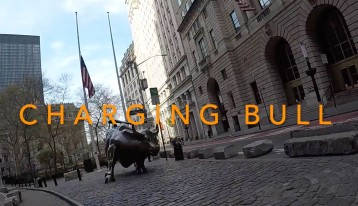
I left my apartment Tuesday morning at 8:30. Normally taxis, ubers and delivery trucks would clog the streets. Starting at W. 72nd Street, I headed down Broadway. Cars were scarce. I cruised past Columbus Circle and Times Square, before heading east on 42nd Street. After passing an empty Bryant Park, I flew down 5th Avenue, the Empire State and Flat Iron buildings a blur. I circled Union Square and got back onto Broadway, pausing only at Houston and Canal streets for the light. When I arrived at the Charging Bull on Wall Street, there were no tourists lined up waiting to snap a picture with the bronze sculpture; he stood abandoned like the hundreds of closed shops I’d just passed. Fitting.
I ventured on to the Staten Island Ferry dock, the end of the road, the tip of Manhattan, with the Statue of Liberty in the distance. Twenty years ago I arrived in New York City with a few dollars in my pocket and a dream in my heart, just as my grandparents and mother had done over 70 years before when they’d sailed in from Europe. Now, all Americans are in the same boat, wondering what our lives will be like in this “new” version of the good ole U. S. of A.
My dad often tells the story of when he attended graduate school in Manhattan. To learn his way around, he drove his Hillman Minx at three a.m. when the streets of the city were quiet. What I learned during my quiet bike ride was that New York City is not about the buildings, the restaurants or even the theater, it’s about the people. And with no people around, the city looks like a big apple with one huge bite missing.
Stay safe.
x, Felice
www.felicecohen.com
 The latest news is that we’ll be “sheltering in place” at least through mid-May. That gives us 30 more days of being home. Thirty more days of watching our roots grow out, watching the sun rise and set from our windows, and discovering new ways to prepare canned legumes. It also gives us an opportunity. How many times over the years have you thought, “I wish I had time to paint the living room.” “I wish I had time start writing my novel.”
Guess what? Now you do.
As tough as these circumstances are with so much out of our control, what if we looked at it from what we can control. We can pick up a book and start reading. We can go through our sweaters and get rid of what we no longer wear.
It’s hard to get motivated, I know, I’ve been working from home for years, but some day (hopefully soon) we will have to once again set an alarm, wash our hair, and put on clothes other than sweats. How will you feel if you look back at this time and think, “I wish I had done (fill in the blank) while I was home.”
Guess what? Now you can.
Write down one thing you’d like to accomplish then picture yourself on May 15 having completed that task. Or at least started it. Whether it’s clean out the garage or lose weight, the hardest step is simply the first. Once you see the slightest sign of progress, you’ll be motivated to keep going.
Try this. Set aside 45 minutes a day toward your goal. Set the timer on your phone and begin. When the timer goes off, pat yourself on the back and resume your Netflix binging. You might have only made a slight dent, but you’ve at least begun; that’s half the battle. Of course, you can always reset the timer and go again.
Because guess what? It’s up to you.
What would you like to accomplish by May 15? Feel free to share it with me. And if you need help on how or where to begin, just ask.
Stay safe.
Felice
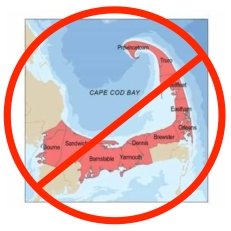 I have always been welcomed home with open arms. After my first sleepover in third grade; after a month away at summer camp; after four years of college, and even years later, after I moved to New York City, my parents welcomed me home for the entire summer.
But now that the world has come down with Corona virus, their arms are not so opened wide. Don’t get me wrong, they want me home, urged me weeks ago to come home, but who knew it would come to this? Like those who fled Poland before the war, encouraging family to join. But many–never imagining what could happen–stayed.
Last week the Rhode Island National Guard went door to door weeding out bad guys, I mean, New Yorkers, telling them to self-quarantine. I must drive through Rhode Island to get home to Cape Cod. Will I be stopped? Sent back to The Big Apple?
New Yorkers have always had reputations. Rude, aggressive, pushy. But that’s not true. We’re determined and hard-working. But now we’ve got a new status: pariah, the 11th plague in this year’s Passover Seder. “Boils, frogs, lice… New Yorkers.”
If I were to go home, which I desperately want to do, I would have to be quarantined for 14 days. Stuck in my room. There, but not there. A view through the window. Food left at my door, like the boy in the plastic bubble. How long can humans go without hugging? Heck, at this point I’d settle for a fist bump from a stranger.
In his book You Can’t Go Home Again, Thomas Wolfe said, “… and now sit quietly by our windows watching all that henceforth never more shall touch us – we call upon you to take heart, for we can swear to you that these things pass.”
I hope Wolfe was right; that these things will pass, because I so want to go home again.
Stay safe.
x, Felice
 Twenty years ago I moved to New York City and lived in the Bronx. I commuted into the city, gazing longingly at Central Park from the express bus, wishing I was one of those walkers or cyclists enjoying its 843 acres.
Ten years later I moved into a tiny apartment in Manhattan one block from Central Park. It was the Park that helped me thrive in that 90-square-foot studio. It became my backyard. I ran the Reservoir, enjoyed concerts on the Great Lawn, and read books on one of the Park’s 9,000 benches.
Now, twenty years later, I am a volunteer Gardener’s Assistant with the Central Park Conservancy. Every Wednesday morning I lace up work boots, grab my ID, and head to the Park. Each week it’s a new project. While raking the North Meadow or mulching quiet paths in the Ramble, I chat with other volunteers about their lives, which part of the city they live in, and which Broadway shows they’ve just attended. And as we beautify the Park we feel good, knowing we are making a difference.
Exactly three weeks ago I pruned an entire section in the Dene Slope, a native meadow near the Central Park Zoo, chatting with my new bestie Carol about her upcoming trip to Denmark. At that point she was still going. Who knew the world would come to a halt days later? With the sun on our faces, clippers in hand, tourists walking by, we had no idea a makeshift hospital would be erected inside our cherished park a few weeks later.
But this isn’t the first time Central Park has come to the rescue for the residents of New York City. In the late 1800s, after a number of cholera outbreaks and a tainted milk scare, children were in critical need of fresh milk. Calvert Vaux, the Park architect and designer, had built the Dairy, a fairy tale-like cottage inside Central Park, as a place for children to get it.
New Yorkers are resilient, and we will get through this together. Already, we have bonded in a unique way, opening our windows each evening at 7pm and cheering our thanks to the health care workers and first responders. Central Park may be essential to New Yorkers, but it’s New Yorkers who are essential to Central Park.
 As we enter Week 2 of the Battle Against Covid-19, I wonder, when will it end? Two weeks? Two months? Will it flare up again in the fall? I try to quiet my mind with projects, but as I stay “sheltered in place,” there is only so much meditation, reading, writing, TV watching, dusting, organizing, and sleeping I can do. My mind continually reaches back to funny or special moments, even those that happened years ago, clinging to anything that will put a smile on my face. Here’s one that popped into my head while reading on my couch the other day (in the eight years in my apartment, I’ve never spent so much time on my couch).
It was 1987, and we had a blizzard on Cape Cod. We we were out of school for a week, wore the same clothes for days in a row (well, I did), and we lost power. At first it was fun. We built snowmen; we went sledding; we read books; we played board games; we adjusted. One night, my parents, two younger sisters and I sat huddled together under blankets in the living room, the fireplace roaring as my father read out loud from the book “James and the Giant Peach” with the help of a flashlight. It was a special moment, out of the ordinary for the times. After a few chapters, the only other sound the crackling of logs, the power suddenly came back on. Without missing a beat, my sisters and I leapt up, tossed our blankets, and ran screaming with delight straight into the den to watch television. I can only assume my parents sat there thinking, “Tomorrow we get rid of the TV.”
As this global pandemic causes us to take one great pause, I hope we learn from this and readjust our priorities. When the crisis is over, will we remember to cherish the special moments, or will we jump up and race right back to how it was?
Stay safe.
X, Felice
 Someone, please wake me up and tell me this is a dream.
Each morning I open my eyes and for one second think, “What a crazy nightmare.” Then I remember.
There are moments during my day when nothing seems amiss. I still work from home, still make my bed, still start my day with meditation.
My days are broken up with six-mile walks around the city. Either along the Hudson River, around Central Park, or sometimes I pick an avenue and just go. And for a moment, the city looks the same, sounds the same, smells the same and my mind, which is having a hard time wrapping around this new reality, tricks me into thinking it’s an early Sunday morning and everyone is sleeping. But then I see a “closed” sign on a Starbucks in the middle of a workday and I remember.
I do the walks for exercise, but also for the normalcy it brings. People walking dogs, birds singing, flowers blooming has a calming effect. It’s spring, but this exciting time of the year when we open windows, clean out closets and make plans for summer feels hollow.
I’ve stopped thinking, “Last week I was raking leaves in Central Park.” “Last month I went to the theater three times in a week.” Now the days pass like a scene from the movie “Groundhog Day,” each day mimicking the day before. If we had a hard date of when this would be over, we might feel a little calmer, knowing we can get through this for 20 days. It’s the unending of it that makes my brain spiral into fear, and fear is not what we need right now. We need comfort and support. Then I remember. I have that.
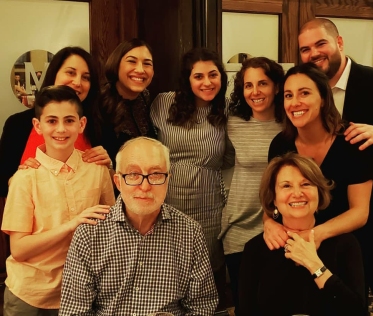
I started a weekly Zoom call with family and friends. Seeing the familiar, loving faces of those who make me feel hopeful and happy is exactly what we need right now.
Wishing you good health and safety.
Sending a virtual hug.
Felice
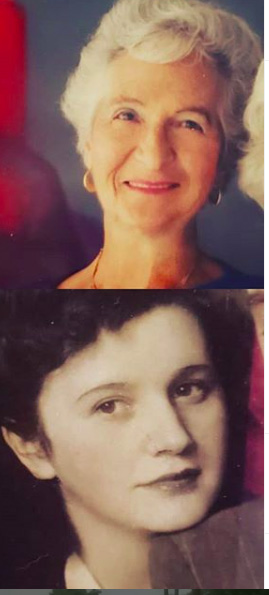 In honor of Grandparents Day today (Sept 8), I’ve decided to post my two chapters from the new anthology Grandmas & Grandkids. As many of you know, I’ve got a deep connection to all of my grandparents. My first book “What Papa Told Me” is about my maternal grandfather, and earlier this year I published a book called “A Father’s Advice,” which is a letter written by my paternal grandfather to my dad. So I was excited to have the opportunity to write about my grandmothers. I actually had three. A step-grandmother, who was every bit my grandmother, I featured in a blog years ago, so I was happy to write about my other two grandmothers. The chapters from the book are below.
Wishing a happy Grandparents Day to all the grandparents out there, and to all the grandkids who bring smiles to their grandparents’ faces.
1. NANA BEACH
My paternal grandmother lived in a 13-room house on Nantasket Beach, just south of Boston. Because of this, my cousins and I called her Nana Beach. Nana Beach was tall, slender, with long fingers that always had a cigarette tucked between two of them. Her nails were long too, and peach color, and matched her toes. Summer months she lived in a bathing suit and even at sixty, with a full head of white hair, she watched her “figure.”
Nana Beach made us popsicles in the shape of cones, which we’d lick on the wrap-around porch watching waves crash onto the shore. We swam in the ocean and searched for clamshells for Nana Beach to use as ashtrays. At dusk, hose in one hand, cigarette in another, Nana Beach rinsed us off, then, placing the cigarette between her lips and tilting her face away so the smoke wouldn’t get in our eyes, she’d wrap us in towels that said Holiday Inn on them.
Days were spent sitting on the seashore listening to Nana Beach regale us with tales from “the day one.” Tales about growing up in the 1920s as the youngest of four daughters. She was born and raised in Boston and lived in the area until she and my grandfather hopped on the retired train to Florida. At one point she worked three jobs—salesgirl at Jordan Marsh, secretary to a police chief, and hot dog seller at night—to put her four children through college.
I was eight when my grandfather died. Nana Beach sold her house and spent summers with our family on Cape Cod. She taught me to play Rummy Q and we played for hours on the deck, flicking away gypsy moths that dropped onto our heads. During those summers I went to camp and missed Nana terribly. She encouraged me to write letters, which she kept in a white three-ring binder.
Nana Beach knit rugs for my dollhouse and crocheted dozens of yarmulkes for my bat mitzvah. Over the years she knit sweaters for me and in return I painted fish on her white slip-on sneakers, which she wore until the soles ran out and I’d paint another pair.
From college until my late thirties, I spent a week every winter with her in Florida. Mornings began with homemade waffles, then Rummy Q until her friends “The Girls” called, asking of our plans. At noon we’d head to the pool. I loved listening to Nana and the Girls give practical advice like using body aches to figure the weather. Afternoons we’d venture to a flea market where Nana taught me how to haggle and when to walk away.
After dinner we watched Jeopardy and Wheel-of-fortune, her “programs,” while Nana knit afghans or booties for the newest great-grandchild, me by her side, untangling yarn and rolling it into balls. Many evenings were spent rummaging through a closet, a treasure trove from every decade of her life filled with silver thimbles, yellowed greeting cards, and wire-rimmed eyeglasses that were my grandfather’s. But as much as she had (and she had a lot) everything had a home, either inside a box, a coffee can or a suitcase.
I learned from Nana Beach that every sock should have a mate, that Tupperware should be stored in stacks, and that “like things” fit better together. My home now reflects her same discipline of organization. It’s no surprise I became a professional organizer.
When Nana Beach moved into an assisted living facility, her entire collection of stuff was whittled into four drawers. On every visit, I arrived with a strawberry milkshake which she’d eagerly accept and as she sipped, I removed the contents of those drawers, mostly sweatpants and sweaters, and ask, “Still wear this, Nana?” She’d respond with a nod or a shake, her mouth occupied by the thirsty straw. Once done, I put the “like things” away, bagging the rest for donation. Then I sat on her bed and showed her copies of my latest publications, which she’d add to that same white binder. She’d ask who I was dating, what books I was reading and if I was happy. Whenever a nurse entered Nana Beach would say, “This is my granddaughter, she’s a writer, read this,” and shove the binder at them.
When Nana Beach died peacefully in her sleep at age 90, the family gathered to sit Shiva. In her honor we played Rummy Q. My aunt told me Nana’s belongings were downstairs and I followed her to the basement. On an old ping-pong table was a cardboard box the size of a toaster. Inside were pictures of her four children, 11 grandchildren, and 13 great-grandchildren. There was a clown doll, an empty jewelry box, a purple sweatshirt, and a worn three-ring binder. I reached for the binder, lips quivering, and leafed through the plastic protective sheets, reading everything I had ever written, from my childhood letters to my opinion columns in a New York City newspaper.
“Nana was your biggest fan,” my aunt said.
I wasn’t surprised, not really. The feeling was mutual.
2. FELA
Fela was a mystery, a woman in the photos
Though there aren’t many
She is smiling in them
But something is missing
You can see it in her eyes
Emptiness, sadness
They don’t glow like a woman in love
Like a mother of three
In their absence are memories, haunts, fears
All I know of her is that she was my mother’s mother
My maternal grandmother
And her name
Fela
It means lucky, which she was
Kind of
Fela was once a singer
But never nana or grandma or granny
She never made it that far
She died two years before her first grandchild arrived
In truth, she died before that
Way before
She died over and over and over
In the ghetto, the camps, the March
They took her youth, her hope, and her voice
A voice like an angel
She had dreamed of becoming a singer
But that dream was taken, broken, shattered
She came to America for freedom
But could not forget the past
Could not shake the images, the guilt, the burden
She tried, she worked, she birthed
But the memories remained
She had therapy, shock treatments
Nothing worked
On a sunny spring day, she cleaned the house
Cooked supper and washed laundry
Then took out a rope
She tied one end to her son’s chin-up bar
The other end she placed around vocal chords that once sung sweetly
And stepped onto a chair
And looked around at her home
At pictures of her beautiful family
Perhaps she blew them a kiss
Perhaps she prayed
Perhaps she did none of that
Before stepping off
And away
To somewhere else
Five years later they gave her name away
Gave it to her granddaughter
Felice they called her, happy it means
Something Fela had once been
Long, long ago
My maternal grandmother, Fela, was born in 1924 in Lodz, Poland, the youngest of eleven children. At sixteen, the Nazis turned her hometown into a ghetto. Barricaded inside the walls of her once beautiful town, she watched her father die from starvation, saw her mother and siblings beaten and taken away. One day as she hid in a room with her oldest sister and the sister’s twin boys, toddlers, two Nazis stormed in. They grabbed Fela’s sister and dragged her away, leaving Fela with the boys who were crying for their mother. The sister screamed, “Take care of my boys! Promise nothing should happen to them!” In that melee, my grandmother promised.
The next day the Nazis returned. They wanted the boys. My grandmother, weak and emaciated, tried to stop the men, but she was no match. She was left feeling guilty for not saving them. But what could she have done?
The Nazis returned one more time. They took my grandmother to Auschwitz. There she learned the fate of her nephews, for in Auschwitz they tortured little kids, split them apart in tugs-of-war, tossed them into pits of fire, and smashed them against walls. My grandmother’s guilt grew, but she realized the only way to survive was to put that guilt in the back of her mind. And somehow she survived that hell and the Death March to Bergen Belsen and liberation. In the Displaced Persons camp she met my grandfather. As they recovered, they planned a life together. Once healthy, they married, had a little girl, my mother, and started a new life.
A few years later someone threw a rock and broke their window, glass shattering to the floor. They feared what had happened would happen again. They didn’t want to chance it and applied for visas to America.
In New York City they settled in Brooklyn and got jobs. Their hard work paid off and in time bought their own grocery store. Two more children would come, both boys. Years later, Fela would get a visitor, her oldest sister. The sister had survived, had gone to Paris. During that visit the sister asked, “Why didn’t you save my boys?” In that split second, the guilt my grandmother had stuck in the back of her mind came rushing back. Fela was never the same. The guilt, the memories, it was too much. Therapy didn’t help. Shock treatments didn’t work. Only one thing would stop the depression.
Exactly twenty years after surviving the Holocaust, my grandmother took her own life; it was her only way out. She left behind a husband, and three children ages eighteen, twelve and six. A few years later a little girl would be born, a third generation, and they would give her Fela’s name: Felice, which means happy. And this little girl would grow up happy thanks to a woman she would never meet, a woman who survived incredible odds, who herself was once happy.
 Discarding sentimental is the toughest challenge when it comes to eliminating clutter. Key is asking: Are these items displayed in your home or in a box in your basement? If these items are in a box, how sentimental can they be? Cherished items should be seen and admired. Better yet, used.
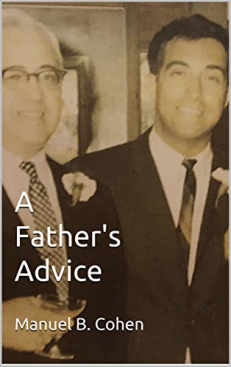
My dad doesn’t have many sentimental items from his past. There is his navy pea coat, his lieutenant shoulder boards, and a letter from his father full of life advice written when my dad was a sophomore at Clark University.
I came upon this letter last year when helping my mom declutter family files. What initially caught my attention was my paternal grandfather’s elegant handwriting. No one writes anymore, let alone legibly. I read the four-page letter and was hooked at “Dear Rick.” Turns out his steady script matched his solid advice, but even more astounding is how relevant that advice remains.
“Impatience, in its way, is a virtue to goad the world forward and hopefully should be tempered with the wisdom of maturity and experience.”
“You want to be a psych major? Go ahead. A teaching career is good if you are so disposed in that direction.”
“If you feel really, but really bad, try these two foolish things…Sing out loud! Laugh out loud!”
“I have found it necessary to be flexible mentally. Believe and know there is a good and right answer to every problem…Turn these minus items into plus items…”
On finding this treasure, I had an idea. I typed up his words, added family photos, and created a book for my dad for Father’s Day. Everyone who has read it said they wished they had received such advice when entering adulthood. That’s when I decided to share his advice with everyone.
It’s not lost on me I’ve now published a book about each of my grandfathers. They were special men. My maternal grandfather Murray I knew well, but my paternal grandfather Manny, the author of the letter, died when I was eight. I wish I had known him better. Fortunately for me I got to receive good advice growing up from his son, the most important of which Manny gave in the opening line of his letter:
“Advice to give is so easy. But, it’s hard to give good advice.”
A Father’s Advice is now available as an ebook. Paperback coming soon!
 What do Ambien, counting sheep, and making to-do lists have in common? Turns out, they can all help you fall asleep faster.
A study at Baylor University asked two groups of volunteers to write out lists before going to bed. Group One was asked to write a to-do list of things they needed to do over the next few days, and Group Two was asked to write a list of tasks already completed. End result? Those in Group One who wrote out to-do lists fell asleep nine minutes faster; an effect similar to some sleeping aids.
I’ve been doing this for years. Who knew it was helping me fall asleep.
My day always ends with writing out my next day’s to-do list. Not only does this create an agenda for me to follow when I wake, but it frees my mind of trying to remember all the stuff I need to do. And there’s a lot of stuff. Work deadlines, food shopping, scheduling appointments, posting pictures of gloves—the list is endless and relentless, and unless I write it down it follows me to bed.
For many of us, a good night’s sleep is often a thing of our dreams. We may shut off our cell phones, turn on our sound machines, and climb into satiny sheets, but sleep remains out of reach. Which is where the pen and paper come in. Writing down tasks or thoughts bouncing around in our heads eliminates the worry of not forgetting, makes big issues seem minor and allows our brains to sign off for the day and fall asleep.
But those extra nine minutes of sleep isn’t the only benefit. The more well rested you are, the more productive you can be at tackling that to-do list. It’s a win-win.
Sweet Dreams.

 Felice Cohen